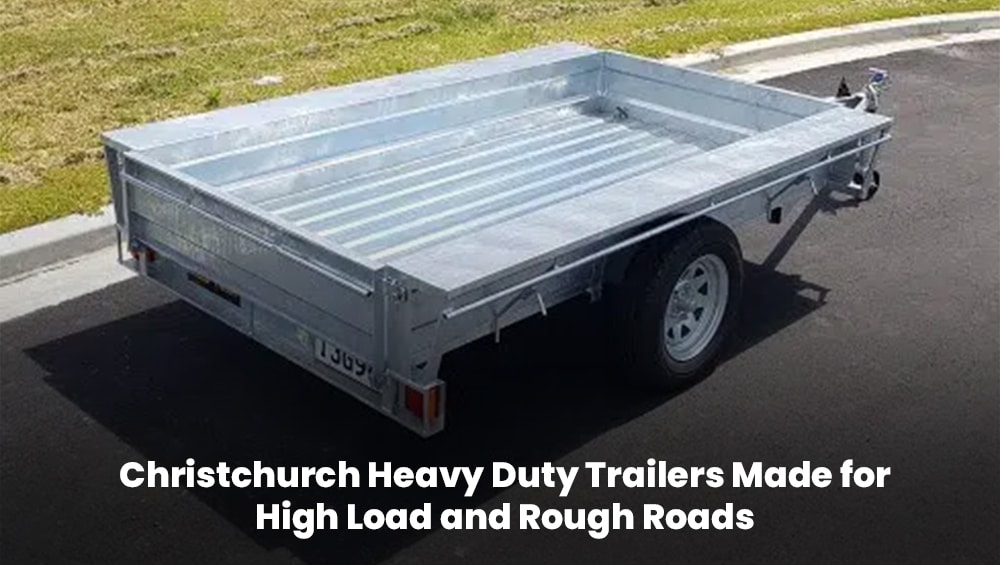
Christchurch Heavy Duty Trailers Made for High Load and Rough Roads
When the job is tough, your trailer needs to be tougher
Christchurch heavy duty trailers are designed to carry high loads and perform on rough roads without compromise.
If you work in construction, farming, transport, or contracting around Christchurch, you already know this truth: not all trailers are built the same. On paper, many look strong. In real life, once they hit rough roads, uneven sites, or carry serious weight, the difference shows fast.
I’ve spoken with operators who’ve cracked welds after one season, farmers who’ve bent axles on gravel roads, and contractors who lost time because their trailer couldn’t handle daily punishment. A heavy duty trailer isn’t just a purchase. It’s a tool you depend on every single day.
That’s exactly why Christchurch heavy duty trailers must be built for high load, tough terrain, and long-term use. In this guide, I’ll walk you through what really matters, what mistakes to avoid, and how to choose a trailer that works as hard as you do.
Why Christchurch Demands True Heavy Duty Trailers
Christchurch is not an easy environment for trailers. You’ve got a mix of sealed roads, farm tracks, construction zones, hills, and coastal weather. A trailer that performs well on smooth highways may fail quickly here.
From my experience, most trailer damage in this region doesn’t come from overloading alone. It comes from constant vibration, sudden drops, uneven weight, and repeated use over long distances. That’s where lighter trailers start to show cracks—literally.
Heavy duty trailers designed for Christchurch must handle:
- Rough rural roads
- Construction sites with loose surfaces
- High daily usage
- Wet, muddy, and dusty conditions
- Long towing hours without warping
When a trailer is made properly, you don’t worry about it. You hook it up and get on with your work.
What “Heavy Duty” Should Actually Mean
Many trailers are sold as “heavy duty,” but the term gets used too loosely. In real working conditions, heavy duty means strength you can trust without thinking twice.
Here’s what I look for when judging whether a trailer deserves that label:
- Thick steel chassis, not thin folded sections
- Strong cross members placed at stress points
- Reinforced drawbar designed for load pull, not just balance
- Solid axle setup rated well above normal use
- Proper suspension built for weight, not comfort only
I once saw two trailers rated for the same load. One survived five years of daily site work. The other twisted within months. The difference wasn’t the load rating—it was how the trailer was built.
High Load Carrying: Where Many Trailers Fail
High load isn’t just about maximum weight. It’s about how weight is spread and supported over time.
A good heavy duty trailer:
- Keeps the load stable during braking
- Doesn’t sag under constant weight
- Holds alignment even after repeated trips
- Protects tyres from uneven wear
I’ve seen operators overload slightly, thinking it’s fine “just this once.” With a well-built trailer, that mistake doesn’t become a disaster. With a weak one, it turns into costly repairs.
If your work involves machinery, building materials, livestock equipment, or bulk goods, load tolerance matters more than brochure numbers.
Built for Rough Roads and Daily Punishment
Rough roads expose weak points fast. Bolts loosen. Frames flex. Panels rattle. A strong trailer stays quiet and steady even after months of hard use.
Christchurch heavy duty trailers must be designed to:
- Absorb shock without cracking
- Stay straight after hitting potholes
- Protect the load from constant shaking
- Handle uneven ground without scraping or bottoming out
One contractor told me his old trailer felt fine, empty but unstable once loaded on gravel. His replacement felt planted even at full load. That’s not luck—that’s design done right.
Custom Options Matter More Than You Think
Off-the-shelf trailers are fine for light work. But once your job gets serious, custom features save time and money.
Think about:
- Side height based on your load type
- Tailgate strength if you use ramps
- Tie-down points where you actually need them
- Brake setup matched to your towing vehicle
- Wheel and tyre choice for your terrain
When a trailer matches your work style, you stop fighting it. I’ve seen people waste hours each week because their trailer wasn’t suited to what they carry.
This is where choosing the right builder matters, and why many professionals turn to Superiortrailers. for Christchurch-ready heavy duty builds designed for real conditions.
Long-Term Value Beats Cheap Pricing Every Time
I get it—trailers are an investment. But buying cheap usually means paying twice.
Here’s what cheap trailers often cost you:
- Repairs after one or two seasons
- Lost work due to breakdowns
- Tyre and axle issues
- Stress every time you tow heavy
A well-built heavy duty trailer costs more upfront, but it:
- Lasts longer
- Needs fewer fixes
- Holds resale value
- Keeps you working without delays
Over five or ten years, the stronger trailer almost always wins.
Choosing the Right Trailer for Your Work
Before you buy, ask yourself these honest questions:
- What do I carry most often?
- How rough are my regular routes?
- How many trips per week?
- Do I plan to upgrade my equipment later?
The right trailer today should still work for you in five years.
Many Christchurch operators choose builders who understand local conditions, load demands, and road realities. That’s why Superiortrailers has become a trusted name for heavy duty trailers built to handle high load and rough roads without excuses.
FAQs
1. What makes a trailer suitable for rough roads in Christchurch?
Strong chassis design, reinforced suspension, quality axles, and proper weight distribution are key factors.
2. Can heavy duty trailers handle daily commercial use?
Yes, when built correctly, they are designed for repeated loading, long hours, and tough surfaces.
3. Is it worth investing in a custom-built trailer?
For regular heavy use, custom options often save time, reduce wear, and improve safety.
4. How do I know if my trailer is overloaded?
Signs include sagging suspension, unstable towing, uneven tyre wear, and increased braking distance.
Conclusion: A Trailer That Works as Hard as You Do
Your trailer isn’t just something you tow—it’s part of your livelihood. When it’s strong, reliable, and built for your conditions, your work gets easier. When it’s weak, everything slows down.
Christchurch heavy duty trailers must be designed for high load, rough roads, and daily use. Anything less is a compromise you’ll feel sooner or later.
If you want fewer breakdowns, less stress, and a trailer that earns its place behind your vehicle, choose quality built for real work. The right trailer doesn’t just carry your load—it carries your confidence.