Marine Trailers in Christchurch: What Boat Owners Should Check Before Choosing One
Choosing a marine trailer? Check load capacity, corrosion resistance, braking, and boat fit before buying. Make your next trip safer and easier.
A boat trailer can make getting out on the water easy, or turn every trip into a frustrating experience. If the boat sits incorrectly, the trailer is difficult to launch, or the towing setup feels unstable, even a short journey can become stressful.
For boat owners around Christchurch, choosing the right trailer means looking beyond its price and appearance. The trailer needs to support the boat properly, handle its loaded weight, and suit the way you launch, transport, and store your vessel.
If you are comparing marine trailers in Christchurch, this guide explains the key features to check before buying. You will also learn about trailer materials, axle configurations, maintenance, and situations where a custom-built option may be worth considering.
Why Your Boat Trailer Matters More Than You Think
A boat trailer does much more than move your boat from one location to another. It supports the hull, helps distribute weight, and affects how confidently you can tow and launch your vessel.
An unsuitable trailer can create several problems:
- Poor hull support: Incorrectly positioned rollers or supports can place unnecessary pressure on parts of the hull.
- Difficult launching: A poorly matched setup can make launching and retrieving more complicated.
- Towing concerns: Incorrect loading, unsuitable tyres, or inadequate braking can affect towing safety.
- Higher maintenance needs: Exposure to water, road grime, and salt can accelerate corrosion and component wear.
- Storage difficulties: A trailer that does not fit your boat or available storage space can become inconvenient.
Choosing the right setup from the beginning helps make regular boating trips more manageable.
7 Things to Check Before Choosing a Marine Trailer
Before comparing prices, take time to understand what your boat actually requires. These seven considerations can help narrow down suitable options.
1. Boat Length, Hull Shape and Weight
Start with your boat’s overall length, hull design, and fully loaded weight. These details help determine which trailer dimensions and support arrangements are suitable.
Remember that the boat’s weight is not necessarily the same as its advertised dry weight. Fuel, batteries, equipment, and other gear add to the total.
Ask the trailer supplier to help confirm the combined loaded weight and ensure the trailer’s rated capacity is appropriate.
2. Trailer Load Capacity and Weight Distribution
A trailer must be capable of carrying the boat and its equipment within its rated limits. Choosing one based only on boat length can lead to an unsuitable setup.
Check the trailer’s load rating, axle ratings, coupling capacity, and the towing vehicle’s limits. The fully loaded combination must comply with applicable New Zealand requirements.
Weight distribution also matters. An incorrectly positioned boat can affect tow-ball loading and towing stability.
Quick tip: Before buying, make a list of everything that will travel with your boat, including fuel, batteries, anchors, and fishing equipment.
3. Single Axle or Tandem Axle?
The right axle configuration depends on the boat’s weight, trailer design, intended use, and towing requirements.
| Feature | Single axle | Tandem axle |
| Wheel arrangement | One axle | Two axles |
| Manoeuvrability | Often easier in tight spaces | Can require more room to manoeuvre |
| Typical application | Suitable for some lighter setups | Often considered for heavier setups |
| Tyres and components | Fewer components to maintain | More tyres and running gear to inspect |
| Key consideration | Must meet load and towing requirements | Must also meet load and towing requirements |
Neither configuration is automatically better for every boat. Ask a specialist to assess the actual loaded weight and intended use before deciding.
4. Adjustable Rollers and Boat Support
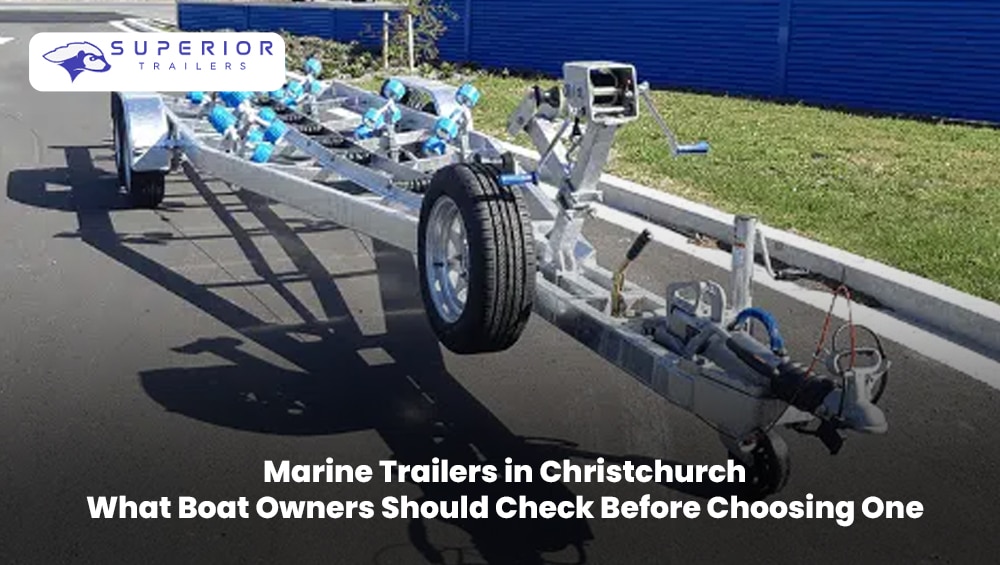
Rollers help support the hull and guide the boat during launching and retrieval. Their positioning should suit the hull’s shape and the trailer’s design.
Adjustable roller systems can be useful when a boat needs a more tailored support arrangement. Correct positioning helps distribute support appropriately and makes loading easier.
Check that the rollers are suitable for your hull and that their adjustment range meets your boat’s requirements.
5. Braking System and Towing Compatibility
The appropriate braking setup depends on the trailer’s specifications, loaded weight, and applicable regulations.
Before buying, check the trailer’s braking system, coupling, safety chains, and compatibility with your towing vehicle. Confirm that the vehicle can legally and safely tow the fully loaded combination.
If you are unsure about the requirements, ask the trailer manufacturer or a qualified specialist rather than relying on assumptions.
6. Galvanised Construction and Corrosion Protection
Marine trailers regularly encounter moisture, and saltwater exposure can make corrosion a particular concern.
Galvanised steel provides a protective zinc coating that helps resist corrosion. However, its long-term condition still depends on use, cleaning, and maintenance.
If you launch in saltwater, ask about the trailer’s construction, protective finish, fasteners, and maintenance requirements. Rinsing the trailer with fresh water after saltwater use is a sensible routine.
7. Tyres, Lights and Essential Safety Features
A suitable trailer needs more than a strong frame. Its running gear and safety components must also be appropriate for the load and intended journeys.
Check the condition and load rating of the tyres, wheel bearings, suspension, lights, coupling, and safety chains. Confirm that the braking equipment works correctly where fitted.
If you are buying a used trailer, inspect these components carefully and address any defects before towing.
Galvanised Marine Trailers: Why They Matter Around Water
Water exposure is part of owning a boat, but it can create extra maintenance demands for the trailer.
A galvanised finish helps protect steel from corrosion, making it a useful feature to consider when comparing marine trailer designs. This is particularly relevant if your boat regularly travels to coastal launching spots.
However, galvanising does not make a trailer maintenance-free. Salt deposits, scratches, damaged coatings, and trapped moisture can still create problems.
To help protect your trailer:
- Rinse it with fresh water after saltwater use.
- Pay attention to areas where salt and dirt can collect.
- Check for damaged coatings and signs of corrosion.
- Inspect brakes, bearings, rollers, and fasteners regularly.
- Follow the manufacturer’s maintenance recommendations.
A little attention after each trip can help you identify issues before they become more expensive repairs.
How Your Boat’s Hull Shape Affects Trailer Selection
Two boats of similar length may require different trailer configurations. Their hull shapes, keel designs, weight distribution, and launching requirements can vary considerably.
A trailer must support the boat in the right places without putting unnecessary pressure on the hull.
Roller positioning, support arrangements, and axle placement should therefore be considered together. A setup designed for one boat may not suit another, even if their dimensions appear similar.
When discussing your requirements with a trailer supplier, provide your boat’s make and model, dimensions, weight, and hull details wherever possible. Photographs and manufacturer specifications can also help clarify what is needed.
Marine Trailers for Boats, Jet Skis and Custom Requirements
Not every watercraft needs the same trailer design. A conventional boat, a jet ski, and a specialised vessel can have different support and transport requirements.
For jet skis, consider the hull support, loading arrangement, launching conditions, and secure tie-down points.
For boats with unusual dimensions or specialised storage needs, a custom-built trailer may provide a more suitable solution than adapting a standard design.
Superior Trailers offers marine trailer options and custom jet-ski trailer solutions. Discussing your watercraft’s specifications with the team can help establish which design is appropriate.
Marine Trailer Maintenance Tips for Christchurch Boat Owners
Regular maintenance helps keep your trailer in better condition and can reveal problems before they affect your next trip.
After saltwater use: Rinse the trailer thoroughly with fresh water, paying attention to the wheels, frame, and areas where salt can accumulate.
Check the running gear: Inspect tyres, wheel bearings, suspension, and brakes. Follow the manufacturer’s recommended inspection and servicing schedule.
Inspect rollers and supports: Look for worn rollers, damaged brackets, loose fasteners, or changes in the way the boat sits on the trailer.
Check electrical components: Test the lights and inspect wiring, plugs, and connections for damage or corrosion.
Look over the frame: Check for cracks, impact damage, corrosion, or damaged protective coatings.
Arrange servicing when needed: If you notice unusual noises, excessive movement, braking issues, or damaged components, have the trailer assessed before your next journey.
Maintenance needs vary depending on trailer design, usage, and exposure. Follow the manufacturer’s instructions and seek professional advice when necessary.
When Should You Consider a Custom Marine Trailer?
A custom trailer may be worth considering when a standard model does not adequately meet your boat’s requirements.
You might explore a custom design if:
- Your boat has unusual dimensions or hull characteristics.
- Standard roller arrangements do not provide suitable support.
- You need a particular axle or loading configuration.
- Your watercraft requires a specialised transport arrangement.
- Your storage or launching conditions create specific design constraints.
Customisation should begin with accurate measurements and a clear understanding of the boat’s loaded weight. The design must also account for towing compatibility, capacity, and relevant safety requirements.
Before committing, ask the manufacturer which features can be customised and how the proposed setup will suit your boat.
Why Consider Superior Trailers in Christchurch?
Choosing a trailer supplier that understands your requirements can make the buying process more straightforward.
Superior Trailers provides trailer solutions in Christchurch, including marine trailer options, custom trailer builds, and trailer servicing and repairs.
Depending on the design, relevant features may include galvanised construction, adjustable roller systems, and movable axle assemblies. Availability and suitability will depend on the specific trailer and your boat’s requirements.
Before choosing a model, discuss your boat’s dimensions, loaded weight, intended use, and towing vehicle with the team.
Visit Superior Trailers to explore the available options and enquire about a suitable trailer for your needs.
Frequently Asked Questions About Marine Trailers in Christchurch
1 What should I look for when buying a marine trailer in Christchurch?
Check the boat’s dimensions, fully loaded weight, hull shape, trailer capacity, axle configuration, braking system, and corrosion protection. Also consider where you launch your boat and how frequently you tow it. A trailer specialist can help confirm which setup suits your requirements.
2 How do I choose the right trailer size for my boat?
Start with the boat’s overall dimensions, hull design, and loaded weight. The trailer must provide suitable support and remain within its rated capacity. Check the towing vehicle’s limits as well, and ask a specialist to confirm the proposed setup before purchasing.
3 Are galvanised marine trailers better for boat owners?
Galvanised steel offers corrosion protection and can be a practical choice for trailers exposed to moisture and saltwater. However, it still needs regular cleaning and inspection. The right choice also depends on the trailer’s design, finish, intended use, and maintenance requirements.
4 What is the difference between single and tandem axle boat trailers?
A single-axle trailer has one axle, while a tandem-axle trailer has two. Each configuration has different handling, manoeuvrability, and maintenance considerations. The suitable option depends on the loaded weight, trailer design, boat, and towing requirements.
5 How often should a marine trailer be maintained?
Inspect the trailer before trips and clean it after saltwater exposure. Follow the manufacturer’s schedule for servicing brakes, bearings, and other components. Usage, storage conditions, and water exposure all affect maintenance needs, so seek professional advice if you notice wear or damage.