Equipment Transporters in Christchurch: A Buyer’s Guide
Buying an equipment transporter in Christchurch? Know what to check before you choose. Explore key points like load capacity, trailer size, towing needs, and build quality.
Moving heavy machinery between job sites is part of everyday work for construction crews, equipment hire businesses, and contractors. The right trailer can make these trips easier, reduce loading difficulties, and help protect valuable equipment during transport.
However, not every trailer suits every machine. A digger, scissor lift, plate compactor, and generator all have different transport requirements. Choosing the wrong setup can create problems with loading, towing, weight distribution, and equipment security.
If you are comparing equipment transporters in Christchurch, start by understanding what you need to carry, how often you will move it, and which trailer features suit your work.
Superior Trailers, based in Christchurch, offers purpose-built equipment transport solutions for construction, agricultural, and commercial applications. This guide explains what to consider before choosing a trailer and how to find an option that fits your requirements.
What Is an Equipment Transporter and Who Needs One?
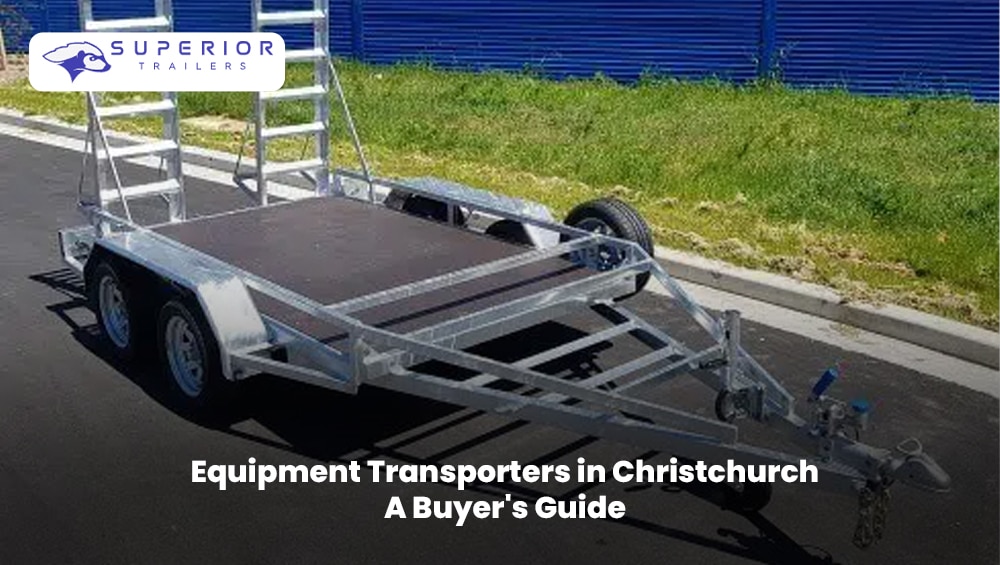
An equipment transporter is a trailer designed to carry machinery or specialised equipment from one location to another. Unlike a general-purpose trailer, it can include features suited to a particular load, such as low decks, loading ramps, specialised mounting points, or additional tie-down brackets.
These trailers can be useful for:
- Construction contractors: Moving compact diggers and machinery between building sites.
- Equipment hire companies: Transporting machinery to customers and collecting it after hire.
- Landscaping businesses: Carrying compactors and other job-site equipment.
- Agricultural operators: Moving suitable machinery and equipment between properties.
- Generator and compressor hire businesses: Transporting equipment used for temporary power and compressed air.
The best choice depends on the machine’s weight, dimensions, loading method, and intended use. A trailer designed for a plate compactor, for example, may not be suitable for a heavier excavator.
Types of Equipment Transporters for Different Jobs
Before comparing individual models, identify the equipment you need to move. Specialised trailers can make loading and unloading more manageable when their design matches the machine.
1. Digger Trailers
Digger trailers are designed to carry suitable excavators and related equipment. Their deck dimensions, loading ramps, braking systems, and tie-down points all affect how practical they are for regular site work.
Superior Trailers offers digger trailer models with gross laden weight (GLW) ratings of 2,500kg and 3,500kg. The range includes low-profile and high-profile configurations, along with heavy-duty loading ramps and multiple tie-down brackets.
The lower deck option can help reduce the loading angle, depending on the machine and site conditions. These features are worth considering if your team frequently moves compact diggers between jobs.
2. Scissor-Lift Trailers
Scissor lifts need a suitable loading surface, sufficient capacity, and secure restraint points. A trailer designed for this equipment can simplify transport between warehouses, construction projects, and maintenance sites.
Superior Trailers offers scissor-lift trailers in 1,750kg, 2,500kg, and 3,500kg GLW configurations. Features include a tilting chassis, manual loading winch, wide loading ramps, and a non-slip hardwood deck.
Before choosing a model, confirm the lift’s operating weight, dimensions, and compatibility with the trailer’s loading arrangement.
3. Compactor Trailers
Plate compactors and roller compactors are common on landscaping, paving, and construction jobs. They require a trailer that suits their weight and allows controlled loading.
Superior Trailers offers compactor trailers rated at 1,000kg GLW, with configurations for roller and plate compactors. Depending on the variant, features include a tilting chassis, a loading winch, and a hardwood or easy-slide deck.
Check the exact model’s specifications and loading procedure before purchasing.
4. Generator and Air-Compressor Trailers
Generators and compressors often need to move between different work locations. Hire businesses may also need mounting arrangements that accommodate replacement equipment.
Superior Trailers‘ gen-set and air-compressor trailers include universal mounting locations designed to accommodate suitable units. Available configurations vary by model, with GLW ratings extending up to 3,500kg.
These trailers can be worth considering for businesses that regularly transport powered equipment. Confirm the unit’s dimensions, mounting requirements, and total loaded weight before selecting a model.
You can compare the available options on the Superior Trailers equipment transporters page.
Key Features to Check Before Buying an Equipment Transporter
A trailer may look suitable at first glance, but its specifications determine whether it will work for your equipment and towing vehicle.
Here are the main details to check.
Load Capacity and Payload
Start with the machine’s actual operating weight. Include attachments, buckets, accessories, and any other items carried with it.
Gross laden weight is the maximum permitted loaded weight of the trailer. Payload is the amount of equipment and cargo it can carry after accounting for the trailer’s own weight.
Do not assume the trailer’s GLW rating is its available payload. Ask the manufacturer to confirm the usable payload for the specific model.
Deck Dimensions and Loading Height
Measure the machine’s length, width, and height. Check whether its tracks, wheels, or other components fit comfortably within the trailer’s usable deck area.
Deck height matters too. A lower deck may reduce the loading angle, while suitable ramps can help make the loading process more manageable.
Consider the available working space at your usual sites, especially where access is restricted.
Tie-Down Points and Equipment Security
Securement points must be appropriate for the load and its restraint system. Their location and strength matter when positioning straps or chains.
Look for an arrangement that lets operators secure the machine without awkward angles or interference from its components.
Always follow the equipment manufacturer’s instructions and applicable load-restraint requirements.
Braking and Running Gear
Braking systems, tyres, axles, suspension, and couplings affect how a trailer performs under load.
Check that the trailer’s components are rated for the intended use and compatible with your towing vehicle. Ask which braking system is supplied with the specific model and whether optional configurations are available.
Construction and Corrosion Protection
Equipment trailers may face mud, moisture, dirt, and demanding work conditions. Frame construction, protective finishes, weld quality, and maintenance access are worth reviewing.
Superior Trailers lists fully hot-dip galvanised construction across its equipment transporter range. This finish can help protect steel against corrosion, although regular inspection and maintenance remain important.
How to Choose the Right Trailer Size and Load Capacity
Choosing a trailer involves more than matching its advertised weight rating to the machine’s weight.
Use this process before requesting a quote.
- Identify the equipment. Record its operating weight, dimensions, attachments, and any additional items you need to carry.
- Confirm the loaded weight. Account for the trailer itself and everything carried on it.
- Check the trailer rating. Verify the GLW, payload, axle ratings, and other relevant limits.
- Check your towing vehicle. Confirm its permitted braked or unbraked towing capacity, towball limits, and other applicable restrictions.
- Review the loading arrangement. Make sure the deck, ramps, and securement points suit the machine.
- Discuss regular usage. Explain whether you will use the trailer occasionally, daily, or across multiple hire customers and job sites.
A trailer should meet your actual requirements without exceeding any component’s rating. A larger model is not automatically the better choice if it adds unnecessary weight or creates towing limitations.
For New Zealand-specific requirements, consult the official NZ Transport Agency Waka Kotahi website and confirm any questions with a qualified professional.
Standard vs Custom-Built Equipment Transporters
A standard trailer can be a practical choice when its dimensions, load rating, and features match your equipment.
A custom-built trailer may be worth discussing when your machine has unusual dimensions, requires a specific mounting arrangement, or needs a particular loading setup.
| Consideration | Standard trailer | Custom-built trailer |
| Design | Existing specifications | Designed around agreed requirements |
| Equipment compatibility | Suits listed applications | Can address specific equipment needs |
| Modifications | Depends on available options | May allow more tailored features |
| Purchasing process | Usually simpler to compare | Requires additional design discussion |
Before choosing either option, ask about lead times, pricing, available modifications, and compliance requirements. These details depend on the proposed design and should be confirmed directly.
Superior Trailers provides custom trailer design services, allowing customers to discuss changes to existing designs or more specialised requirements.
Common Mistakes to Avoid When Buying an Equipment Trailer
A few checks before purchasing can help prevent expensive problems later.
Choosing by price alone: A lower purchase price may not mean the trailer suits your equipment or workload. Compare specifications and the features you genuinely need.
Ignoring the trailer’s own weight: The advertised GLW is not the same as the payload available for your machine.
Overlooking towing compatibility: Check the towing vehicle, coupling, braking requirements, and applicable weight limits together.
Forgetting about loading access: Consider ramp placement, deck height, ground conditions, and the space needed to load safely.
Assuming one trailer suits every machine: Different equipment can require different deck dimensions, restraint arrangements, and loading methods.
Skipping maintenance checks: Tyres, brakes, lights, couplings, structural components, and securement points need regular inspection.
Towing Compatibility and Trailer Safety Considerations
Safe transport starts before the trailer leaves the yard. The equipment must be loaded correctly, restrained securely, and within all applicable weight limits.
Before each trip, check that:
- The towing vehicle is suitable for the fully loaded trailer.
- The coupling is correctly connected and secured.
- Tyres, lights, brakes, and safety connections are in suitable condition.
- The machine is positioned and restrained according to the relevant instructions.
- The load does not exceed the trailer, axle, tyre, or vehicle ratings.
- The trailer and load comply with applicable New Zealand road requirements.
Pay attention to weight distribution as well. An incorrectly positioned load can affect stability and handling.
If you are unsure about loading, restraint methods, or towing limits, seek guidance from a qualified professional before transporting the equipment.
Why Choose Superior Trailers in Christchurch?
Choosing an equipment trailer is easier when you can discuss the actual machine, working conditions, and transport requirements with an experienced manufacturer.
Superior Trailers is based in Christchurch and supplies trailer solutions to customers throughout the South Island. Its equipment transporter range covers diggers, compactors, scissor lifts, generators, and air compressors.
The company highlights several practical features:
- Purpose-built options: Different trailer designs for different equipment categories.
- Practical engineering: Features such as low-profile decks, ramps, and tie-down brackets on relevant models.
- Custom design capability: The opportunity to discuss modifications or specialised trailer requirements.
- Local manufacturing: A Christchurch base with service to customers across the South Island.
The right model will depend on your equipment and intended use. Review the specifications and discuss any requirements that are not covered by a standard configuration.
Visit Superior Trailers to review the range and enquire about a suitable option.
Frequently Asked Questions
1. What should I look for when buying an equipment transporter?
Focus on payload, deck dimensions, loading arrangements, tie-down points, braking, towing compatibility, and construction quality. The best choice depends on the equipment you intend to transport.
2. How do I choose the correct equipment trailer capacity?
Calculate the fully loaded weight, including the trailer, machine, attachments, and other cargo. Check the trailer’s GLW, payload, axle ratings, and towing vehicle limits before purchasing.
3. Can I get a custom-built equipment transporter in Christchurch?
Superior Trailers offers custom trailer design services. Contact the company to discuss your equipment dimensions, loading requirements, preferred features, and whether an existing model can be modified.
4. Which trailer is suitable for transporting diggers and machinery?
A purpose-built digger trailer may suit compact excavators, while scissor lifts, compactors, generators, and compressors may need specialised designs. Always verify the machine’s dimensions, loaded weight, and compatibility with the chosen trailer.
5. How can I maintain an equipment transporter?
Inspect tyres, brakes, lights, couplings, suspension, frame components, and tie-down points regularly. Follow the manufacturer’s maintenance recommendations and address damage or wear before further use.
Conclusion: Find an Equipment Transporter That Fits Your Work
The right equipment transporter should match your machinery, suit your towing vehicle, and make regular loading and transport practical. Taking time to check capacity, dimensions, braking, and securement features can help you avoid an unsuitable purchase.
For contractors, hire businesses, and operators looking for equipment transporters in Christchurch, Superior Trailers offers specialised trailer options and custom design services to discuss.
Start by identifying the equipment you need to carry and how you will use the trailer. Then explore the available models and speak with the team about a suitable solution.