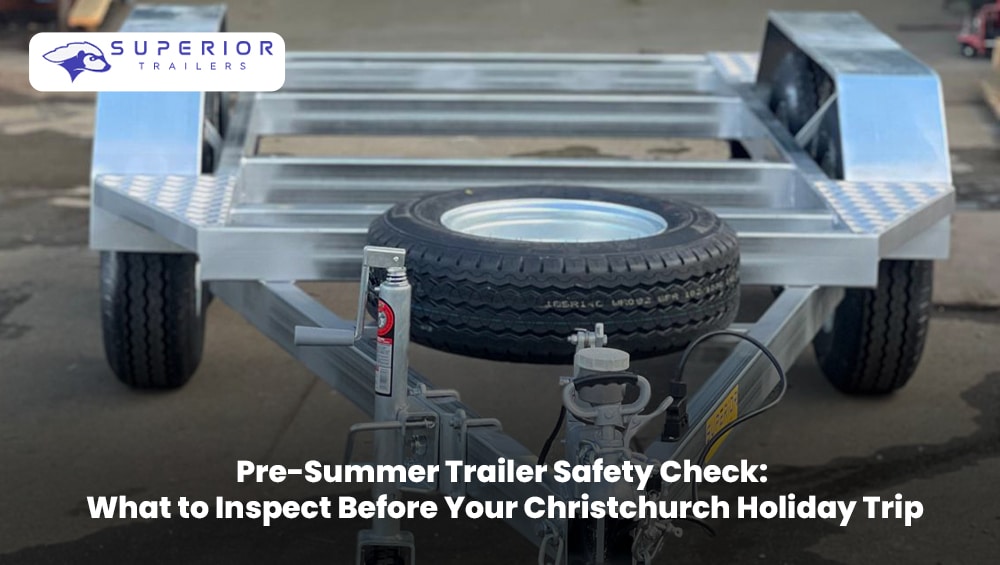
Pre-Summer Trailer Safety Check: What to Inspect Before Your Christchurch Holiday Trip
Summer is the busiest towing season of the year in Canterbury. Boats head to the lakes and coast, families tow camping gear to the Mackenzie Country, and plenty of trailers come out of the shed for the first time in months. A trailer that’s been sitting through winter can develop problems you won’t notice until you’re on the road.
A quick check before your first big trip can save you from a roadside breakdown, a damaged load or a failed Warrant of Fitness. Here’s what to inspect, and when it’s time to bring your trailer in for a proper service.
Why a Pre-Season Check Matters
Trailers often get less attention than the vehicles towing them. Tyres slowly lose pressure, wheel bearings dry out, lights corrode and safety chains get forgotten. These issues build up quietly, especially on trailers that are stored outside or only used a few times a year.
Holiday trips also tend to mean longer distances, higher speeds, heavier loads and hot weather. That puts extra strain on every part of your trailer, so small faults are more likely to become big problems.
1. Tyres
Start with the tyres, including the spare if you carry one.
- Check tread depth and look for uneven wear, which can point to alignment or axle issues
- Look for cracks, bulges or perishing on the sidewalls, common on trailers that sit for long periods
- Set tyre pressures to suit the load you’ll be carrying
- Check wheel nuts are tight
Old tyres can look fine but still be unsafe. If your trailer tyres have been on for many years, it’s worth having them checked even if the tread looks good.
2. Wheel Bearings
Bearings are one of the most common causes of trailer breakdowns, and failures often happen on long, hot trips.
Jack up each wheel and spin it. It should turn smoothly and quietly. Then grab the top and bottom of the tyre and rock it. Noticeable play, grinding or rough spots are signs the bearings need attention.
Boat trailers need extra care. Saltwater gets into bearings during launching and can cause corrosion over time. Rinse the trailer with fresh water after every launch, and have the bearings checked regularly. Our guide on what boat owners should check before choosing a marine trailer covers more on keeping boat trailers in good shape.
3. Lights and Wiring
Connect the trailer to your vehicle and test every light: tail lights, brake lights, indicators and number plate light.
If lights flicker or don’t work, check the plug for corrosion or bent pins, and inspect the wiring for damage where it runs along the drawbar. Poor earth connections are a common cause of faulty trailer lights. Our trailers are built with internal wiring and soldered joints to help prevent these problems, but older or lower-quality trailers often need rewiring over time.
4. Coupling and Safety Chain
The connection between your trailer and vehicle is critical.
- Check the coupling locks securely onto the towball and doesn’t have excess play
- Make sure the coupling size matches your towball
- Inspect the safety chain and shackle for wear, stretched links or rust
- Check the jockey wheel winds freely and locks in place
Never tow without a properly attached safety chain.
5. Brakes
If your trailer has brakes, check they’re working correctly before a long trip. Look for worn pads or shoes, leaking or damaged lines on hydraulic systems, and make sure the handbrake holds the trailer.
Not sure whether your trailer needs brakes for the load you’re carrying? Check the current rules on the NZ Transport Agency website, or ask our team.
6. Chassis, Drawbar and Deck
Walk around the trailer and look for:
- Rust, especially on the drawbar, chassis rails and around welds
- Cracks in welds or bent sections
- Damaged or rotten deck boards
- Loose or broken sides, tailgates and tie-down points
- Worn springs or loose U-bolts
Rust and cracked welds are more than cosmetic issues. They can weaken the trailer and cause it to fail a WoF.
7. Registration and WoF
Before you hit the road, make sure your trailer’s registration and Warrant of Fitness are current. A pre-season check is a good time to sort out any repairs that could cause a WoF failure, rather than finding out at the inspection.
Load It Right
Even a well-maintained trailer can become unsafe if it’s loaded badly. A few basics:
- Don’t exceed the trailer’s rated capacity or your vehicle’s towing limit
- Place heavier items over or slightly ahead of the axle, so the trailer isn’t tail-heavy
- Secure everything with suitable straps, and check them after the first few kilometres
- Cover loose loads like green waste or gravel
If you regularly carry heavy or awkward loads, it may be time for a trailer built for the job. Read our guide on what makes a heavy duty trailer worth buying, or browse our heavy duty trailers.
When to Book a Professional Service
Some checks are easy to do at home. Others need the right tools and experience. Bring your trailer in if you notice:
- Noisy, rough or loose wheel bearings
- Lights that keep failing or wiring that’s damaged
- Rust or cracks on the chassis or drawbar
- Brake problems
- Worn springs, bent axles or uneven tyre wear
- Anything that could fail a WoF
Our trailer repairs and servicing team can assess your trailer, give honest advice on what needs fixing, and help get it WoF-ready before your trip. Book well ahead of Christmas, as the weeks before the holidays are a busy time for trailer servicing.
Is It Time for a New Trailer?
If repair costs are adding up, or your current trailer no longer suits how you use it, a new trailer may be the better option. Our range includes:
- Domestic trailers for everyday jobs and trips to the tip. See which domestic trailer is right for you.
- Marine trailers built to carry different hull shapes safely. Read how to choose the right boat trailer.
- Vehicle transporters for cars and motorbikes.
- Equipment transporters for machinery. See our equipment transporter buyer’s guide.
Need something that doesn’t fit a standard design? We build custom trailers made to suit your exact needs.
Get Your Trailer Summer-Ready
A few minutes of checking now can prevent a ruined holiday later. Inspect your tyres, bearings, lights, coupling and chassis, and bring your trailer in for a service if anything doesn’t look right.
Call us on 03 384 4428 or contact Superior Trailers to book a service or talk about a new trailer. For more guides, visit our resources page.
FAQ
How often should I service my trailer?
It depends on how often and how far you tow, and what you carry. Trailers used regularly, for heavy loads or around saltwater, need more frequent checks. A good habit is a full check before the busy summer season.
How do I know if my trailer wheel bearings need replacing?
Common signs include grinding or rumbling noises, a wheel that feels rough or loose when you spin or rock it, or a hub that gets unusually hot after driving. If you notice any of these, have the bearings checked before towing further.
Can you get my trailer ready for its WoF?
Yes. We can inspect your trailer, advise on any repairs and help make sure it’s ready for its Warrant of Fitness.