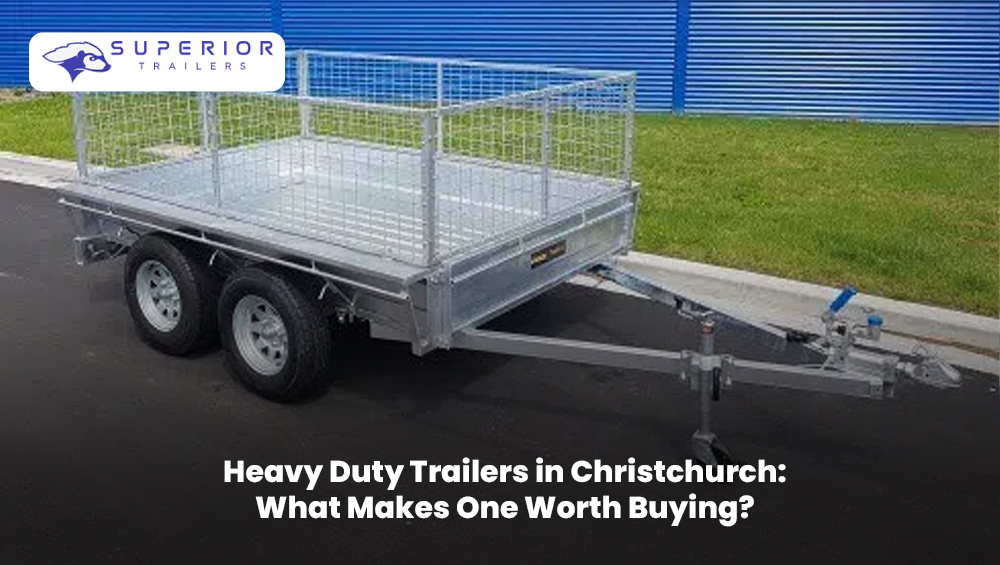
Heavy Duty Trailers in Christchurch: What Makes One Worth Buying?
Looking for a heavy duty trailer in Christchurch? Here’s what to check before buying, from strength and load capacity to safety and durability.
A trailer that works well for weekend trips might struggle with daily construction jobs, landscaping materials or heavy equipment. If you regularly transport demanding loads, choosing a stronger trailer can make your work easier and help you avoid unnecessary wear.
For tradespeople, farmers and contractors, the decision involves more than finding the right size. Chassis strength, braking, payload, suspension and build quality all deserve attention before you buy.
If you are comparing heavy duty trailers in Christchurch, this guide explains the features that matter, the mistakes to avoid and how to choose a trailer suited to your work.
What Actually Makes a Trailer Heavy Duty?
A heavy-duty trailer is designed for demanding transport tasks where strength, durability and load capacity are important. However, the label alone does not guarantee that a trailer suits every job.
Its construction and rated specifications tell you much more than its appearance.
Look for features such as:
- A strong chassis and drawbar designed for the intended load
- Suitable axles and suspension
- Brakes appropriate for the trailer’s specifications
- A durable deck that suits the materials being carried
- Secure tie-down points
- Corrosion protection for New Zealand conditions
The trailer’s Gross Laden Weight (GLW) and actual payload are also important. A physically large trailer may not carry as much weight as you expect.
Before choosing a model, consider what you transport, how frequently you use the trailer and the weight of your typical load.
Seven Features to Check Before Buying a Heavy Duty Trailer
Chassis and Drawbar Strength
The chassis supports the trailer and helps distribute the load. The drawbar connects the trailer to the towing vehicle, making both components important for safe and reliable operation.
Check how the frame is constructed and whether its specifications suit your intended use. A trailer designed for regular commercial work should be assessed differently from one used occasionally around the home.
Ask the manufacturer about the chassis design, rated capacity and suitability for your type of load.
Axles and Suspension
Axles and suspension help support the load and manage movement while travelling over uneven surfaces.
The correct setup depends on the trailer’s rated capacity, load distribution and intended application. A suitable configuration can help improve stability and reduce unnecessary stress on components.
Do not choose an axle arrangement based on appearance alone. Check the manufacturer’s specifications and ensure the complete trailer is rated for the work you plan to undertake.
Braking System
Braking is an essential consideration when choosing a trailer, particularly when carrying substantial loads.
The appropriate braking configuration depends on the trailer’s rating, towing vehicle and applicable New Zealand requirements.
Before purchasing, confirm the supplied braking system and the requirements for your particular vehicle combination. Also consider the ongoing inspection and maintenance the system will need.
Never assume that every heavy-duty trailer has the same braking equipment.
Decking and Trailer Sides
The deck should suit the materials and equipment you regularly carry.
For example, landscaping work may involve soil, mulch, plants and green waste. Construction jobs may require transporting building materials, tools or machinery.
Consider the deck’s durability, usable dimensions and ease of loading. Trailer sides should also suit the type of cargo without interfering with safe loading or unloading.
Superior Trailers offers heavy-duty options with non-slip hardwood decking on applicable models. Check the individual model specifications before making your decision.
Tie-Down Points and Load Security
A trailer needs more than sufficient capacity. It must also allow you to secure the load properly.
Look for accessible tie-down points and consider whether their position suits your cargo. Long materials, equipment and irregularly shaped loads may require different securing arrangements.
Before buying, think about your most common loads and how you will restrain them. Proper load distribution and suitable restraints help reduce the risk of movement during transport.
Galvanised Construction and Rust Protection
Trailers used regularly outdoors are exposed to moisture, dirt and changing weather conditions. Over time, corrosion can affect their appearance and condition.
Hot-dip galvanising provides a protective zinc coating that helps resist corrosion. It is a useful feature to consider when comparing trailers for regular use in New Zealand.
However, no finish makes a trailer maintenance-free. Cleaning, inspections and timely repairs remain important throughout its working life.
Build Quality and Practical Details
Small design details can make a difference when using a trailer every day.
Check the quality of the finish, the accessibility of loading points, the arrangement of the lights and the condition of moving parts. Consider whether the trailer’s dimensions suit your storage space and work requirements.
A well-matched trailer should make routine tasks practical, not simply look strong in a showroom.
Heavy Duty vs Standard Trailers: Which Is Right for You?
The best option depends on your regular loads and how often you use the trailer.
| Feature | Standard Trailer | Heavy Duty Trailer |
| Typical use | Household and general transport | Demanding work and heavier applications |
| Construction | Suited to its specified rating | Designed around the requirements of its intended application |
| Load capacity | Varies by model | Varies by model; some options have higher ratings |
| Commercial use | Depends on the task and rating | Often suitable for frequent trade and work-related use |
| Key consideration | Everyday practicality | Strength, capacity and suitability for demanding loads |
A heavy-duty model is not automatically the right choice for everyone. If you mainly carry garden waste or small household items, a standard trailer may meet your needs.
However, regular construction, landscaping or equipment transport may justify investing in a model designed for more demanding work.
Compare specifications rather than relying on the trailer’s name or appearance.
Standard or Tipping Heavy Duty Trailer: Which Should You Choose?
Both options have practical uses, but the right choice depends on how you handle your materials.
Standard Heavy Duty Trailers
A standard trailer may suit users who transport equipment, building materials, tools and other cargo that can be loaded and unloaded manually or with suitable equipment.
It can be a practical option when you need a general-purpose work trailer.
Tipping Heavy Duty Trailers
A tipping trailer can make unloading loose materials easier. Depending on the model and its design, it may suit landscaping waste, soil, aggregate and certain construction materials.
Before choosing one, consider the tipping mechanism, rated capacity, unloading conditions and maintenance requirements.
Remember that the trailer must remain within its rated limits during loading, transport and unloading.
If you regularly move loose materials, compare tipping and standard models based on the tasks you perform most often.
Who Benefits Most From Heavy Duty Trailers?
Heavy-duty trailers can be useful across several industries, provided the model is suitable for the specific job.
Builders and Construction Workers
Builders often transport tools, timber, building supplies and job-site equipment. A trailer with suitable dimensions, secure tie-down points and an appropriate payload can simplify daily transport.
Landscapers and Garden Contractors
Landscapers may carry mowers, tools, plants, soil and green waste. A durable deck and practical loading access can be useful for frequent jobs.
Those regularly moving loose materials may also want to compare tipping models.
Farmers and Rural Property Owners
Farm work can involve moving equipment, supplies and materials between different locations. The correct trailer depends on the cargo, terrain, towing vehicle and intended operating conditions.
Commercial Operators
Businesses that use trailers regularly should consider durability, maintenance and downtime alongside the initial purchase price.
Choosing a model suited to its workload may help avoid unnecessary strain and make routine transport more manageable.
Buying Heavy Duty Trailers in Christchurch: What Should You Consider?
Christchurch and the wider Canterbury region support a range of construction, landscaping, agricultural and commercial activities. Trailer requirements can vary considerably between these jobs.
Start by identifying the loads you carry most frequently. Then consider the distances travelled, road conditions, loading methods and storage arrangements.
Here are a few practical checks:
- Match the trailer to the job: Choose dimensions and capacity based on your actual requirements.
- Consider local working conditions: Regular outdoor use makes corrosion protection and maintenance worth considering.
- Check towing compatibility: Confirm your vehicle’s permitted towing capacity and all relevant weight limits.
- Think about loading: Ensure the deck, sides and tie-down points suit your cargo.
- Plan for maintenance: Check what servicing and inspections the trailer will require.
When comparing heavy duty trailers in Christchurch, ask manufacturers for specifications rather than making decisions based on photographs alone.
Superior Trailers is a Christchurch-based option worth considering if you are comparing standard and tipping trailer models for work or commercial use.
Five Common Mistakes to Avoid When Buying a Heavy Duty Trailer
1. Choosing by Price Alone
A lower purchase price may seem attractive, but it should not be the only deciding factor. Compare specifications, construction, warranty terms and ongoing maintenance requirements.
2. Ignoring Payload
A trailer may look large enough but still have insufficient payload for your typical cargo. Calculate the usable capacity before committing to a purchase.
3. Forgetting About the Towing Vehicle
Your vehicle must be suitable for the complete towing combination. Check its permitted towing capacity, towball download limit and other relevant restrictions.
4. Overlooking Load Security
The ability to fit your cargo onto the deck does not mean it can be transported safely. Consider suitable restraints, tie-down points and load distribution.
5. Buying More Trailer Than You Need
A larger or higher-rated trailer may not offer better value if it does not suit your regular tasks. Choose based on actual requirements rather than simply selecting the biggest available model.
Why Build Quality Matters More Than the Initial Price
A trailer is a working asset, especially for businesses that depend on regular transport.
The purchase price matters, but so do durability, maintenance, suitability and the cost of keeping the trailer in service.
When comparing options, look beyond the initial quote. Ask about construction materials, component specifications, warranty coverage, servicing and the availability of replacement parts.
Also consider how frequently the trailer will be used. A model intended for occasional household jobs may not be the most practical choice for daily commercial work.
The aim is not necessarily to buy the most expensive trailer. It is to choose one that meets your needs without paying for features you are unlikely to use.
Why Consider Superior Trailers in Christchurch?
If you are comparing trailers for construction, landscaping or other demanding work, Superior Trailers is a local manufacturer to include in your research.
Its range includes heavy-duty standard and tipping trailers, with specifications that vary by model.
Depending on the model, features may include hot-dip galvanised construction, reinforced chassis and drawbar components, tie-down rails and non-slip hardwood decking.
Some heavy-duty models are offered across GLW ratings from 1,750 kg to 3,500 kg. Confirm the exact rating, empty weight, payload and included equipment for the model you are considering.
You can explore the range here:
View Heavy Duty Trailers at Superior Trailers
Before making a decision, explain your typical load, towing vehicle and intended use. This helps you compare the available options against your actual requirements.
Your Final Heavy Duty Trailer Buying Checklist
Before purchasing, use this checklist to compare models:
- The trailer suits the type of work I do.
- Its GLW and payload meet my requirements.
- My towing vehicle is suitable for the intended combination.
- The chassis, axles and suspension meet the required specifications.
- The braking system is appropriate for the trailer and towing setup.
- The deck and dimensions suit my cargo.
- Suitable tie-down points are available.
- The construction and finish suit my operating conditions.
- I understand the warranty and maintenance requirements.
- I have checked the applicable New Zealand towing and loading rules.
Taking time to check these details can help you avoid choosing a trailer that does not suit your day-to-day work.
Frequently Asked Questions
1 What Is Considered a Heavy Duty Trailer?
A heavy-duty trailer is designed for demanding applications and built to specifications appropriate for its intended loads. Its GLW, payload, chassis, axles and braking system help determine whether it suits a particular job.
2 How Do I Choose the Right Trailer Capacity?
Start with the weight and dimensions of your typical cargo. Account for the trailer’s empty weight, then check its GLW, payload and component ratings. Confirm that your towing vehicle and the complete combination also meet all applicable limits.
3 What Does GLW Mean in a Trailer?
GLW means Gross Laden Weight. It refers to the maximum permitted loaded weight of the trailer, including the trailer itself and its cargo.
4 Are Tipping Trailers Better for Construction and Landscaping?
They can be useful when regularly unloading loose materials such as soil, green waste or aggregate. A standard trailer may be more suitable for other cargo. Your choice should depend on your workload and the model’s specifications.
5 What Should I Check Before Buying a Heavy Duty Trailer in Christchurch?
Check its rated capacity, payload, construction, braking system, load-security features and compatibility with your towing vehicle. Ask the manufacturer for model-specific details before purchasing.
Conclusion: Choose a Trailer That Fits Your Work
The right trailer should suit the loads you carry, the vehicle you tow with and the work you do regularly. Chassis strength, payload, braking, load security and corrosion protection are all worth checking before you buy.
Rather than choosing by price or appearance alone, compare the specifications against your actual requirements.
If you are researching heavy duty trailers in Christchurch, explore the Superior Trailers heavy-duty range and compare the available standard and tipping options.
A little research before purchasing can help you choose a trailer that is practical for the job and suited to your long-term needs.