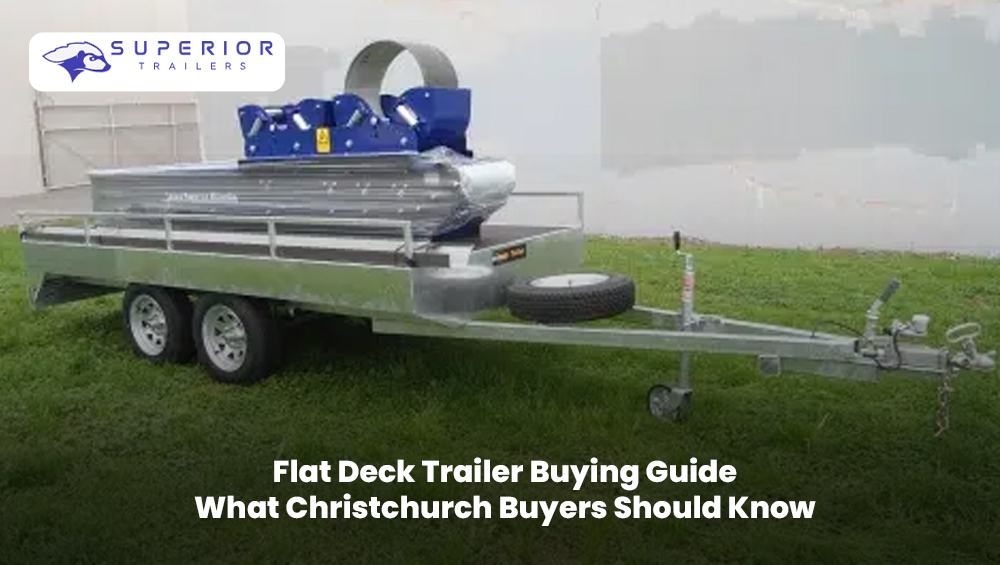
Flat Deck Trailer Buying Guide: What Christchurch Buyers Should Know
Planning to buy a flat deck trailer in Christchurch? Know what to check before choosing one that suits your loads, towing needs and daily work.
Choosing the right trailer is not just about finding enough space to carry your equipment. It is about selecting something that handles your regular workload, keeps your cargo secure, and performs reliably on the road.
For Christchurch businesses, tradies, farmers, and equipment operators, a flat deck trailer can be a practical transport solution. Its open design makes loading easier and provides flexibility for carrying different types of goods.
However, not every trailer suits every job. Deck dimensions, load capacity, axle configuration, construction quality, and towing requirements all deserve attention before making a purchase.
If you are considering a flat deck trailer in Christchurch, this guide explains what to look for and how to make a suitable buying decision.
What Is a Flat Deck Trailer and How Does It Work?
A flat deck trailer is a transport trailer featuring a flat, open platform without fixed enclosed sides. This design allows users to carry different types of cargo, including building materials, machinery, tools, and bulky equipment.
Unlike enclosed trailers, flat deck models provide easy access from multiple sides. This makes loading and unloading more convenient, especially when working with equipment that requires ramps or lifting machinery.
Understanding Flat Deck Trailer Design
Most flat deck trailers feature a supporting chassis, deck surface, axle assembly, wheels, coupling, and safety components.
Their construction depends on the intended application and required carrying capacity.
Common design features include:
- Open platform for flexible loading.
- Strong chassis to support the intended load.
- Suitable axle and suspension configuration.
- Tie-down points for securing cargo.
- Braking systems appropriate to the trailer’s specifications.
- Optional ramps or additional loading features.
The right combination depends on what you plan to transport and how frequently you use the trailer.
Common Uses for Flat Deck Trailers
Flat deck trailers suit a wide range of commercial and personal applications.
Some common uses include:
- Carrying construction materials and building supplies.
- Transporting landscaping equipment.
- Moving machinery and commercial tools.
- Delivering timber, fencing materials, and other bulky goods.
- Supporting agricultural and property maintenance work.
- Transporting equipment between different job sites.
Their flexibility makes them useful for businesses that regularly handle different types of cargo.
Why Are Flat Deck Trailers Popular Among Christchurch Businesses?
Christchurch has a wide range of industries that depend on reliable equipment transportation. Construction companies, landscaping contractors, agricultural operators, and tradespeople often need practical ways to move materials between locations.
A flat deck trailer offers flexibility without the restrictions of an enclosed cargo space.
Transporting Construction Materials and Equipment
Builders and contractors frequently transport materials such as timber, steel sections, plasterboard, and construction equipment.
An open deck provides convenient access when loading larger items. Depending on the trailer’s dimensions and capacity, it can also accommodate materials that are difficult to fit inside enclosed trailers.
For businesses handling regular deliveries, choosing the correct deck size can help make transport more efficient.
Supporting Farming, Landscaping and Trade Work
Landscapers may need to carry mowers, tools, soil supplies, and other equipment. Farmers may require trailers for transporting suitable machinery and agricultural materials.
Tradies also benefit from having a trailer that can accommodate different equipment depending on the day’s work.
The main advantage is versatility. One suitable flat deck trailer can support several transport tasks instead of being limited to a single cargo type.
Key Features to Look for When Buying a Flat Deck Trailer
Before purchasing a flat deck trailer, consider how it will perform under your actual working conditions.
A trailer that looks suitable on paper may not meet your requirements once you start carrying heavier or differently shaped loads.
Deck Size and Load Capacity
Start by considering the dimensions of the items you regularly transport.
A longer deck may suit timber, building materials, and larger equipment. A wider platform can provide additional space for certain types of cargo.
However, a larger deck does not automatically mean a higher carrying capacity.
Always check the trailer’s rated payload and Gross Trailer Mass (GTM) before purchasing.
Chassis Strength and Build Quality
The chassis supports the trailer and plays an important role in its overall performance.
Look for suitable materials, sound construction, quality welding, and a design that matches the intended workload.
The deck surface should also be appropriate for the type of cargo you plan to carry.
For frequent commercial use, build quality deserves particular attention because the trailer may experience regular loading, unloading, and road travel.
Axles, Suspension and Braking Systems
Axles and suspension components affect how a trailer carries weight and behaves while travelling.
Consider whether the trailer’s configuration suits your expected loads and usage.
Braking requirements also matter. Check the trailer’s specifications and ensure its braking system meets applicable New Zealand requirements.
Tie-Down Points and Loading Accessibility
Cargo security should never be an afterthought.
Look for suitable tie-down points that allow you to secure different types of loads safely.
Consider additional features such as loading ramps, removable components, and practical access points if your work involves machinery or heavy equipment.
These details can make everyday trailer use considerably easier.
How to Choose the Right Flat Deck Trailer Size and Weight Capacity
Buying the right size involves more than measuring your largest item.
You should also consider how much weight you regularly carry, the dimensions of your cargo, and the towing capacity of your vehicle.
Matching Trailer Capacity to Your Loads
Make a list of the equipment and materials you expect to transport.
For example, a landscaping contractor may need space for a mower, tools, and additional supplies. A builder may prioritise deck length for transporting timber and construction materials.
Compare these requirements with the trailer’s actual specifications.
Avoid choosing a trailer based only on occasional requirements. Focus on the loads you expect to carry regularly.
Understanding Payload and Gross Trailer Mass
Two important terms to understand are:
- Tare Mass: The weight of the empty trailer.
- Gross Trailer Mass (GTM): The maximum permitted mass carried by the trailer’s wheels when coupled to a vehicle, as specified by its rating.
Payload refers to the cargo weight the trailer can carry within its rated limits.
Do not confuse payload with total trailer mass. Also check the vehicle’s towing capacity, towbar rating, and applicable loading requirements.
When comparing flat deck trailers in Christchurch, these figures help you understand whether a model suits your transport needs.
Flat Deck Trailer vs Enclosed Trailer: Which Is Better?
Both trailer styles serve useful purposes, but their designs suit different transportation requirements.
The right choice depends on what you carry, how you load it, and the level of weather protection you need.
Main Differences in Design and Function
A flat deck trailer has an open platform, while an enclosed trailer has covered sides and a roof.
Here is a simple comparison:
| Feature | Flat Deck Trailer | Enclosed Trailer |
| Design | Open platform | Covered structure |
| Loading access | Multiple sides | Usually through doors |
| Bulky cargo | Flexible loading | Limited by internal dimensions |
| Weather protection | Requires suitable load protection | Better protection |
| Visibility of cargo | Fully visible | Concealed |
| Common applications | Machinery and building materials | Tools and enclosed goods |
Choosing Based on Your Transport Requirements
A flat deck trailer may be more suitable if you regularly transport oversized materials, machinery, or equipment that requires easy loading access.
An enclosed trailer may be preferable when carrying goods that need protection from rain, dust, or public visibility.
Think about your everyday requirements before deciding. The most expensive option is not necessarily the most practical one.
Single Axle vs Tandem Axle Flat Deck Trailers
Axle configuration is another important consideration when comparing trailer options.
Single and tandem axle trailers have different characteristics, and your choice should depend on the trailer’s rated capacity and intended application.
Benefits of Single Axle Trailers
Single axle trailers use one axle and are commonly considered for lighter transport applications.
Potential advantages include:
- Simpler overall configuration.
- Generally lighter trailer construction.
- Convenient manoeuvrability for suitable applications.
- Fewer axle-related components to maintain.
However, the actual carrying capacity depends on the complete trailer design, not simply the number of axles.
Advantages of Tandem Axle Trailers
Tandem axle trailers use two axles and are often considered for heavier-duty applications.
Depending on their specifications, they can offer:
- Greater load-carrying potential.
- Weight distribution across two axles.
- Additional stability when properly loaded.
- Suitability for certain commercial transport requirements.
A tandem axle trailer is not automatically the right choice for every buyer. Compare its rated capacity, construction, suspension, and towing requirements before deciding.
Essential Flat Deck Trailer Safety and Loading Tips
Safe loading protects your equipment, your vehicle, and other road users.
Even a well-built trailer can become difficult to control when cargo is poorly positioned or inadequately secured.
Distributing Weight Correctly
Place cargo according to the trailer manufacturer’s loading guidance.
Avoid concentrating excessive weight at one end or placing loads unevenly across the deck.
Incorrect weight distribution can affect handling and place unnecessary stress on the trailer and towing vehicle.
Securing Loads Before Every Journey
Use suitable rated straps, chains, or other approved securing equipment for the cargo.
Check that:
- Loads cannot slide or shift during travel.
- Tie-down points are suitable for the load.
- Loose materials are properly contained.
- Heavy equipment is secured against movement.
- The load remains within permitted dimensions and weight limits.
Recheck the load after loading and before starting your journey.
Safe Towing Practices in New Zealand
Before travelling, check your tyres, lights, coupling, safety connections, and brakes.
Make sure your towing vehicle is rated for the trailer and its loaded weight.
Follow New Zealand transport regulations, including applicable requirements for trailer dimensions, braking, lighting, and load security.
Allow extra stopping distance and adjust your driving to road and weather conditions.
How to Maintain Your Flat Deck Trailer for Long-Term Performance
Regular maintenance helps identify problems before they become expensive repairs.
A trailer used for commercial work may experience frequent road exposure, heavy loading, and changing weather conditions.
A simple inspection routine can make a meaningful difference.
Checking Tyres, Brakes and Bearings
Inspect tyres for uneven wear, visible damage, and correct inflation.
Check that brakes operate correctly and look for signs of wear or unusual noise.
Wheel bearings should also be inspected and maintained according to the manufacturer’s recommendations.
Do not ignore unusual movement, vibration, or sounds while towing.
Preventing Rust and Structural Damage
Clean dirt, mud, and moisture from the trailer after use, particularly around joints and exposed metal surfaces.
Inspect the chassis, deck, welds, and other structural areas for corrosion or damage.
Pay attention to areas that regularly come into contact with heavy equipment or cargo.
When to Arrange Professional Trailer Servicing
Professional servicing is worthwhile when components show signs of wear or when your trailer is used regularly for demanding work.
A qualified technician can inspect important components and identify issues that may not be obvious during a basic visual check.
Follow the recommended maintenance schedule for your trailer.
Should You Choose a Custom-Built Flat Deck Trailer?
Standard trailer designs can suit many everyday requirements. However, some businesses need a more specific setup.
A custom-built flat deck trailer may be worth considering when standard dimensions or features do not match your equipment.
Benefits of Custom Trailer Design
Customisation allows the trailer’s design to reflect your actual transport requirements.
Depending on the application, options may include:
- Specific deck dimensions.
- Different axle configurations.
- Additional tie-down points.
- Custom loading arrangements.
- Specialised storage or equipment features.
The final design should always consider load requirements, structural strength, and applicable regulations.
When a Standard Trailer May Not Be Enough
Consider a custom design if you regularly transport unusual equipment, oversized materials, or machinery with specific loading requirements.
For example, a contractor carrying specialised equipment may need a different deck layout from a business transporting general building materials.
Discussing your requirements with an experienced trailer manufacturer can help identify a suitable design.
Common Mistakes to Avoid When Buying a Flat Deck Trailer
A little research before purchasing can prevent unnecessary costs and inconvenience.
Here are some mistakes worth avoiding:
- Ignoring payload capacity: Choosing a trailer that cannot safely handle your regular loads creates problems later.
- Selecting the wrong deck dimensions: Insufficient space can restrict what you transport.
- Overlooking towing compatibility: Your vehicle and towbar must be suitable for the trailer and its loaded weight.
- Focusing only on purchase price: Construction quality, maintenance, and long-term suitability also matter.
- Ignoring load security: Proper tie-down points and securing equipment are essential.
- Forgetting future requirements: Consider whether your transport needs may change as your business grows.
- Skipping maintenance checks: Regular inspections help keep important components in good condition.
A suitable trailer should support your work without creating avoidable transport challenges.
Why Choose Superior Trailers for Flat Deck Trailers in Christchurch?
Finding the right trailer manufacturer is just as important as selecting the right trailer design.
Superior Trailers provides trailer manufacturing, custom design, repairs, and servicing in Christchurch.
For customers comparing flat deck trailer options, discussing the intended application can help establish which dimensions, construction features, and specifications are appropriate.
The team can help you explore trailer solutions based on your transport requirements rather than choosing a design without considering its intended use.
Whether you need a practical trailer for trade work, commercial transport, or specialised equipment, it is worth discussing your requirements before making a decision.
Looking for a flat deck trailer in Christchurch?
Visit Superior Trailers to learn more about its trailer solutions.
You can also contact the team on +64 (0) 3 384 4428 to discuss your requirements.
Frequently Asked Questions
What Is a Flat Deck Trailer Best Used For?
A flat deck trailer is useful for transporting building materials, machinery, landscaping equipment, timber, and other bulky cargo. Its open design provides flexible loading access.
How Much Weight Can a Flat Deck Trailer Carry?
The carrying capacity depends on its construction, axle configuration, rated specifications, and tare mass. Always check the manufacturer’s rated payload and applicable weight limits before loading.
What Size Flat Deck Trailer Should I Buy?
Choose a size based on the dimensions and weight of your regular cargo. Consider future requirements, available towing capacity, and legal loading limits before purchasing.
Is a Tandem Axle Trailer Better Than a Single Axle Trailer?
Neither option is automatically better. Single axle trailers may suit lighter applications, while tandem axle models may suit certain heavier-duty requirements. Compare the specifications and intended use.
Are Custom-Built Flat Deck Trailers Worth Considering?
Yes, particularly when standard trailer designs do not meet your equipment dimensions, loading arrangements, or transport requirements. Customisation can provide a more suitable working solution.
How Often Should a Flat Deck Trailer Be Serviced?
Service intervals depend on manufacturer recommendations, usage, and operating conditions. Inspect important components regularly and arrange professional servicing when required.