Air-Compressor Trailers in Christchurch: What to Know Before You Buy in 2026
Buying air-compressor trailers in Christchurch? Explore key factors to check in 2026, from compressor capacity and towing needs to trailer design.
If your work depends on compressed air, getting the compressor to the job site is only part of the challenge. You also need a trailer that can carry the equipment safely, handle Christchurch roads and make setup easier once you arrive.
For contractors, tradespeople, hire companies and businesses using mobile equipment, air-compressor trailers in Christchurch can provide a practical way to keep essential equipment mobile without dedicating a truck or ute to every job.
But not every trailer is suitable for every compressor. Weight, braking, towing requirements, trailer construction and the way the equipment will be used all need to be considered before you buy.
What Is an Air-Compressor Trailer?
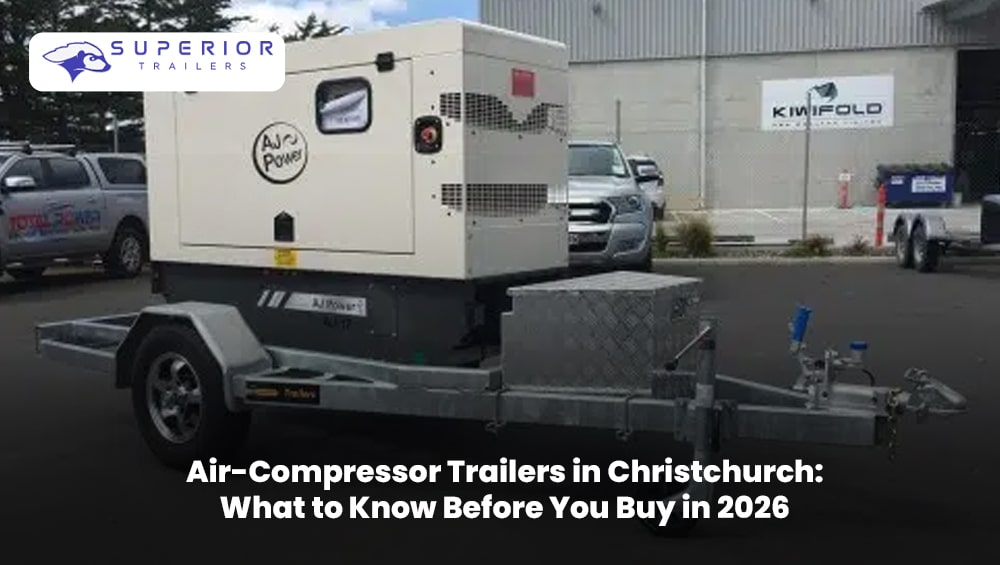
An air-compressor trailer is a purpose-built or modified trailer designed to transport an air compressor and related equipment between work sites.
Instead of permanently loading a compressor onto a general-purpose trailer, a dedicated setup can provide a more secure and convenient way to transport the equipment.
Depending on the application, the trailer may need to accommodate:
- A portable air compressor
- Fuel or power equipment
- Hoses and fittings
- Tools and accessories
- Protective mounting systems
- Storage compartments
- Safety equipment
- Additional job-site equipment
The right configuration depends on the compressor’s dimensions, weight and intended use.
Why Businesses Choose Air-Compressor Trailers in Christchurch
Christchurch has a strong mix of construction, infrastructure, agriculture, landscaping, engineering and trade businesses. Many of these industries need equipment that can move between different locations.
A trailer-mounted compressor can be particularly useful when equipment needs to travel from one project to another.
1. Easier transportation
A properly designed trailer allows the compressor to travel with the equipment rather than requiring separate transportation arrangements.
This can be valuable for contractors working across Christchurch and Canterbury.
2. Better job-site flexibility
Construction and maintenance work rarely happens in one permanent location. A mobile compressor can be taken directly where compressed air is required.
This may include construction sites, workshops, farms, road projects and industrial locations.
3. Purpose-built equipment transport
A general trailer may technically carry heavy equipment, but that does not automatically make it the best choice.
A purpose-built trailer can be designed around the equipment it needs to carry, helping make loading, securing and transportation more practical.
4. One mobile setup
For businesses that regularly use the same compressor, having a dedicated trailer can create a more organised equipment package.
The compressor, hoses and supporting equipment can remain together rather than being loaded and unloaded repeatedly.
What Should You Look for in an Air-Compressor Trailer?
Choosing a trailer should involve more than checking whether the compressor physically fits.
Here are several important factors to consider.
Trailer weight and load capacity
Start with the actual weight of your compressor and everything else you intend to carry.
The trailer needs sufficient capacity for the complete loaded setup, not just the compressor itself.
Remember to account for accessories, tools and other equipment that may be carried during everyday work.
Overloading can create unnecessary risks and may affect towing performance.
Braking requirements
The braking setup is another important consideration for heavier trailers.
Depending on the trailer’s specifications and loaded weight, braking requirements may apply. Your tow vehicle also needs to be suitable for the trailer you intend to use.
Before purchasing, make sure the complete towing combination is appropriate for the loaded trailer.
Strong construction
Work-site equipment can be heavy and demanding.
A trailer used regularly for commercial applications needs to cope with loading, unloading, road travel and changing work environments.
Strong construction and suitable components can help provide the durability businesses expect from a working trailer.
Secure compressor mounting
The compressor should not simply sit on the trailer deck.
Its mounting arrangement needs to suit the equipment and trailer design, keeping the load properly secured during transportation.
A well-planned setup can also make access to the compressor easier when you reach the job site.
Storage and accessories
Think about what else you take to work.
You may need hoses, tools, fittings, cables or other equipment alongside the compressor.
Including suitable storage or planning the trailer layout around these items can make the setup considerably more convenient.
Don’t Forget the Tow Vehicle
One of the easiest mistakes when choosing a trailer is focusing only on the trailer.
Your tow vehicle matters just as much.
Before buying, consider:
- The vehicle’s towing capacity
- The trailer’s loaded weight
- Towbar specifications
- Braking requirements
- Trailer coupling compatibility
- Payload limitations
- The type of roads you regularly travel
A trailer that works well behind one vehicle may not be suitable for another.
If you’re unsure, discuss your intended setup with a trailer manufacturer before committing to a particular configuration.
Air-Compressor Trailers for Different Industries
There is no single trailer design that works for every business.
Construction and building
Construction crews may need compressed air for tools and equipment across multiple sites. A mobile trailer can make transportation between projects easier.
Road and infrastructure work
Infrastructure projects can involve equipment moving between different locations. A robust trailer can help keep the compressor available where it is needed.
Agriculture
Farms and rural businesses may require portable equipment across larger properties or different work areas.
A suitable trailer can provide greater flexibility than keeping heavy equipment permanently positioned in one location.
Engineering and industrial work
Engineering businesses may have specialised compressor requirements. In these situations, a custom trailer configuration can be useful when standard trailer layouts don’t provide enough space or suitable mounting.
Equipment hire
For hire businesses, equipment needs to be transported safely and efficiently between customers.
A well-designed trailer can help create a practical package for repeated commercial use.
Customisation Can Make a Big Difference
Not every compressor has the same dimensions or operating requirements.
That is why custom trailer design can be worth considering.
Depending on the project, you may need changes to the deck, mounting points, storage, dimensions, braking system or other components.
Working from the equipment’s specifications rather than trying to make the equipment fit an existing trailer can result in a more practical overall setup.
For businesses purchasing equipment for regular commercial use, think about how the trailer will be used six months or two years from now—not just how it will be used on day one.
Christchurch Conditions Matter
A trailer used around Christchurch may experience a mixture of urban roads, highways, construction areas and rural routes.
That means durability and ease of maintenance should be considered alongside appearance.
Ask yourself:
- How frequently will the trailer be used?
- Will it travel long distances?
- Will it operate around construction sites?
- Will it carry additional equipment?
- Will different vehicles tow it?
- How often will loading and unloading happen?
These questions can help determine the right specification.
Make Safety Part of the Design
Safe transportation starts before the trailer reaches the road.
The compressor and additional equipment should be loaded and secured correctly, while the trailer itself needs to be maintained in suitable condition.
Regularly check components such as:
- Tyres and wheels
- Coupling equipment
- Brakes
- Lights
- Safety chains
- Mounting points
- Trailer structure
It is also important to understand the applicable New Zealand trailer and towing requirements for your particular setup.
Why Choose a Specialist Trailer Manufacturer?
Buying a trailer is easier when the manufacturer understands how the trailer will actually be used.
For specialist equipment such as an air compressor, the conversation should go beyond trailer length and colour.
A specialist manufacturer can look at the equipment specifications, expected load, towing vehicle and intended application to help determine an appropriate design.
Superior Trailers provides trailer manufacturing and modification solutions in Christchurch, including trailers designed around specific commercial and equipment requirements.
If you already have an air compressor and need a trailer built around it, discussing the dimensions, weight and intended use can be a useful starting point.
Final Thoughts
Choosing air-compressor trailers in Christchurch is ultimately about matching the trailer to the equipment and the work.
The compressor’s weight, trailer capacity, braking, mounting, towing vehicle, storage and expected working environment should all be considered before making a decision.
A well-planned trailer can make equipment transportation simpler and give your business a more practical mobile setup.
If you need a trailer for an air compressor, don’t settle for a design that only fits the equipment. Consider how the complete setup will work on real jobs.
Talk to Superior Trailers about your requirements and discuss a trailer or custom solution designed around your equipment.
FAQs About Air-Compressor Trailers in Christchurch
1. What is an air-compressor trailer used for?
An air-compressor trailer is designed to transport an air compressor and associated equipment between work sites. It can be useful for construction, trades, agriculture, infrastructure, engineering and equipment hire.
2. Can I put any air compressor on a trailer?
Not necessarily. The compressor’s weight, dimensions, mounting requirements and operating setup need to be considered when selecting or designing a trailer.
3. Do air-compressor trailers need brakes?
Braking requirements depend on the trailer and its loaded weight, along with applicable New Zealand requirements. The tow vehicle and trailer should be considered as one complete towing combination.
4. Can an air-compressor trailer be customised?
Yes. Depending on the manufacturer and application, a trailer can potentially be designed or modified around the compressor’s dimensions, weight, storage needs and other equipment.
5. What should I take to a trailer manufacturer?
Provide the compressor’s make and model, dimensions, weight and any available specifications. It is also useful to explain what vehicle will tow the trailer and what other equipment you need to carry.