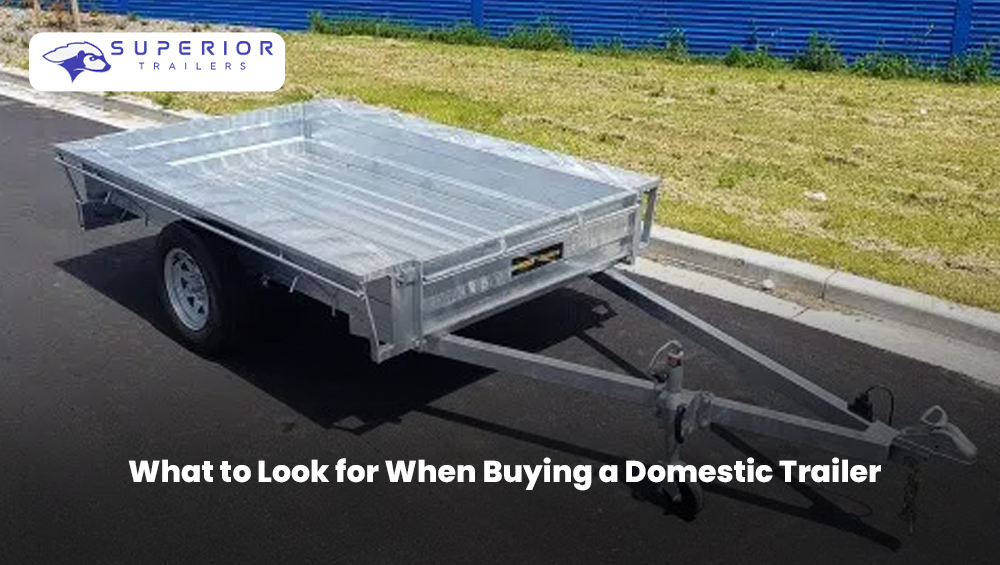
What to Look for When Buying a Domestic Trailer
Buying a domestic trailer? Check its size, towing needs, build quality, safety features and storage options before making your choice.
A good trailer should make everyday jobs easier, not create another problem to manage. Whether you are clearing the garden, moving furniture, carrying tools or taking materials to a project, the right trailer gives you the space and flexibility to get the job done.
For homeowners, DIY enthusiasts, landscapers, tradespeople and small businesses, domestic trailers can be a practical option for regular hauling. However, choosing the right model means looking beyond size and price. Load capacity, trailer construction, towing requirements, storage and the type of work you normally do all deserve consideration.
If you are comparing Domestic Trailers in Christchurch, here is what to look for before making your decision.
What Is a Domestic Trailer?
A domestic trailer is designed for general-purpose hauling and everyday transport. Unlike specialised trailers built for one particular application, these models can be used for a wide range of jobs.
Common uses include:
- Moving garden waste and green waste
- Transporting tools and equipment
- Carrying DIY and building materials
- Moving furniture and household items
- Taking bikes and recreational equipment
- Supporting landscaping and property maintenance work
- Transporting supplies for smaller trade jobs
The advantage is versatility. Instead of buying a trailer for just one task, a well-chosen domestic model can become useful for many different jobs throughout the year.
Choosing the Right Trailer Size
One of the first decisions is determining how much trailer you actually need.
A larger trailer is not automatically the right choice. Think about the loads you regularly transport and how much room you have available for storing and manoeuvring the trailer.
Consider:
- Length and width of the deck
- Expected load weight
- Trailer Gross Laden Weight (GLW)
- Single or tandem axle configuration
- Your vehicle’s towing capacity
- Available storage space
- The type of materials you normally carry
Superior Trailers’ standard domestic range is available in different sizes and GLW options,, allowing buyers to select a configuration that better matches their requirements.
The key is to choose based on your usual work rather than buying the biggest option simply because it offers more capacity.
Standard or Tipping Trailer?
Another important consideration is whether you need a standard trailer or a tipping model.
A standard trailer is suitable for general transportation where the load can be manually unloaded or removed using other equipment.
A tipping trailer can be particularly useful when carrying loose materials such as soil, gravel, garden waste or similar loads. Instead of having to manually remove everything from the deck, the tipping mechanism helps make unloading more practical.
Superior Trailers offers three tipping mechanisms across its domestic tipping range: winch, manual-hydraulic and electric-hydraulic systems. Each option is suited to different preferences and working requirements.
For occasional use, simplicity may be important. If the trailer will be used frequently, easier tipping operation could become a bigger consideration.
Build Quality Matters
A trailer may look simple, but its construction has a direct impact on how it performs over time.
Superior Trailers’ domestic models use features such as profiled steel sides, engineered structural components and engineering-standard welds. The standard range also uses hot-dipped galvanised construction and Australian and New Zealand steel.
These details are worth checking when comparing trailers because the cheapest option is not necessarily the most suitable for regular use.
Pay attention to the:
- Chassis and drawbar
- Axles
- Trailer floor
- Side panels
- Coupling
- Suspension
- Wheels and tyres
- Lighting and wiring
A trailer that is properly matched to its intended workload can be easier to live with over the long term.
Think About How You Will Secure Your Load
Carrying a load is only part of the job. It also needs to remain secure during transport.
Features such as tie-down points, suitable side heights and optional H-frames or cages can make a significant difference depending on what you carry.
For example, someone transporting garden waste may benefit from additional cage height, while a person regularly carrying equipment may prioritise convenient tie-down arrangements.
Superior Trailers offers removable H-frames and flat-pack cage options in several heights, as well as an H-frame and cage combination.
Think about your typical load before choosing optional equipment. There is little value in adding features you are unlikely to use.
Consider Your Towing Vehicle
Your trailer should work with your towing vehicle, not simply fit the job you have in mind.
Before purchasing, check the vehicle manufacturer’s towing limits and make sure the trailer’s specifications are appropriate for your vehicle and intended load.
You should also consider the trailer’s GLW, coupling, braking requirements and axle configuration.
If you are unsure which configuration makes sense, discussing your intended use with a trailer manufacturer can help narrow down the options before you purchase.
Why Christchurch Buyers Should Think About Versatility
Christchurch has a mix of residential properties, lifestyle sections, trades, landscaping work and DIY projects. That means one trailer may be expected to handle several different jobs rather than a single specialised task.
A practical general-purpose trailer can be useful for weekend projects as well as regular work.
Superior Trailers is based in Christchurch and designs and builds standard and bespoke light trailers in New Zealand on a make-to-order basis. The company also provides trailer servicing and repair services.
For buyers who want something beyond a basic off-the-shelf setup, modifications and optional extras are available across the domestic range.
Make Your Trailer Work for You
There is no single trailer configuration that suits everyone.
A homeowner who occasionally moves garden waste may have completely different requirements from a landscaper transporting materials every day. Likewise, someone carrying tools may prioritise secure storage and tie-down options over tipping functionality.
Before buying, write down the jobs you expect the trailer to handle most often. Then consider the size, capacity, axle setup, deck, tipping system and optional accessories around those jobs.
That approach can help you avoid paying for unnecessary features while making sure the trailer is capable of handling the work you actually do.
Frequently Asked Questions
1. What are domestic trailers commonly used for?
They are suitable for many everyday hauling tasks, including garden waste, furniture, tools, building materials, recreational equipment and general property maintenance.
2. What size trailer should I choose?
Choose a size based on your typical loads, towing vehicle and storage requirements. The largest trailer is not necessarily the most practical option for your needs.
3. What is the difference between a standard and tipping trailer?
A standard model is designed primarily for transporting loads. A tipping version allows the trailer body to be raised, making it easier to unload certain loose materials.
4. Are domestic trailers suitable for tradespeople?
They can be useful for tradespeople and small businesses carrying suitable loads. The important considerations are the trailer’s capacity, dimensions and suitability for the vehicle being used to tow it.
5. What optional features are available?
Depending on the model, options can include H-frames, flat-pack cages, different deck configurations, drawbar lengths, coupling options and wheel choices.
6. Should I choose a single or tandem axle trailer?
It depends on your intended load, trailer size and towing requirements. Consider how frequently you will use the trailer and the type of loads you expect to carry before deciding.
7. Where can I get advice about choosing a trailer in Christchurch?
Superior Trailers is based at 260E Port Hills Road, Hillsborough, Christchurch, and can discuss trailer options based on your intended use.
Find the Right Trailer for Your Requirements
Buying a trailer is easier when you start with the jobs you need it to handle. Consider your regular loads, towing vehicle, preferred size and whether features such as tipping, cages or H-frames would genuinely make your work easier.
Superior Trailers offers a range of standard and tipping domestic models, along with modification options for different requirements. If you are looking for a practical trailer in Christchurch, speak with the team about your requirements and explore the available configurations before making your choice.