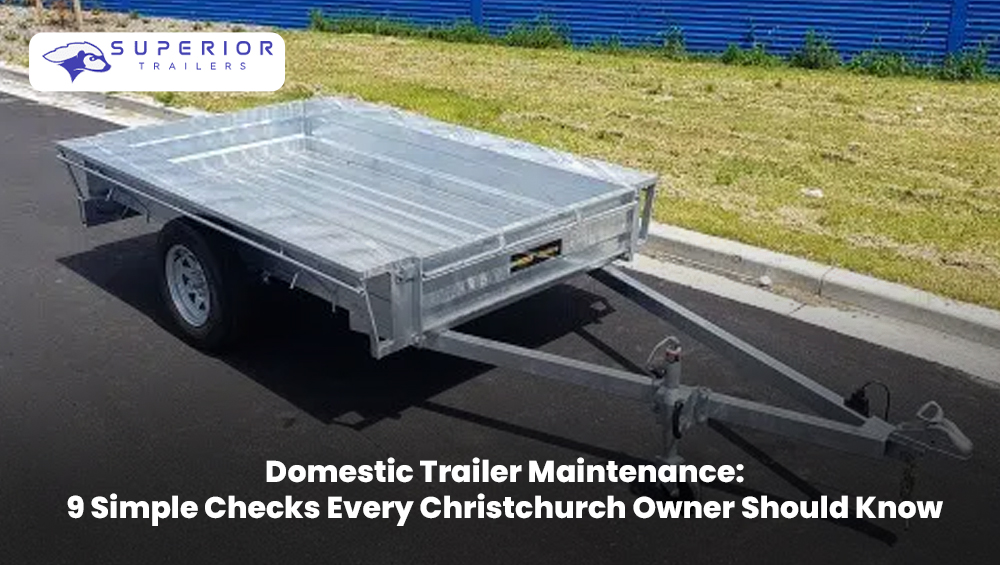
Domestic Trailer Maintenance: 9 Simple Checks Every Christchurch Owner Should Know
Keep your domestic trailer road-ready with 9 simple maintenance checks Christchurch owners can do regularly for safer, smoother towing.
Owning a trailer makes everyday jobs around Christchurch much easier. From taking garden waste to the tip and moving furniture to carrying tools, building supplies or weekend gear, a good domestic trailer can save time and effort.
But even a well-built trailer needs regular attention. Small issues with tyres, lights, wheel bearings or the coupling can quickly become expensive—or create a serious safety problem on the road.
For owners of domestic trailers in Christchurch, a few simple checks can make a big difference. This guide covers nine practical maintenance checks you can do before a trip, plus signs that it is time to call a professional.
Why Regular Trailer Maintenance Matters
Trailer maintenance is easy to overlook because a trailer does not have an engine, dashboard or service light reminding you when something needs attention.
However, it still has several important components that need checking.
NZTA states that a light trailer must have items such as a safe coupling and safety chain or cable, suitable tyres, a sound drawbar, mudguards and required lighting in good working order.
Superior Trailers also recommends regular checks of tyres, lights, wheel hubs and bearings, coupling, tie-down points and general trailer condition.
The good news? Most basic checks only take a few minutes.
1. Check Your Trailer Tyres
Your tyres are one of the first things to inspect before towing.
Look for:
- Uneven tread wear
- Cracks or cuts in the sidewall
- Bulges or visible damage
- Incorrect tyre pressure
- Objects stuck in the tread
- Excessively worn tread
Do not rely only on how the tyre looks. Check the recommended pressure and inspect both sides where possible.
NZTA’s current requirements include a minimum tread depth of 1.5mm around the tyre for light trailers, along with requirements relating to tyre compatibility and condition.
Tip: If your trailer has been sitting unused for months, inspect the tyres carefully before putting it back on the road.
2. Inspect the Wheels and Wheel Nuts
A loose wheel can turn a normal trip into a dangerous situation.
Before towing, visually inspect the wheels and make sure the wheel nuts are secure.
Also watch for:
- Damaged rims
- Cracks
- Unusual movement
- Corrosion
- Signs of overheating around the hub
If you notice something unusual, do not simply tighten a few nuts and continue towing. Have the problem properly inspected.
For regular trailer owners, making a quick wheel check part of the pre-trip routine is a simple habit that can prevent bigger problems.
3. Listen for Wheel Bearing Problems
Wheel bearings allow the wheels to rotate smoothly. When they begin to wear, they can produce warning signs.
Jack the trailer up safely and rotate the wheel by hand. Listen for grinding, rumbling or unusual noises. Also check for excessive movement or looseness.
Superior Trailers recommends checking for rumbling noises and wheel movement because these can indicate worn bearings or loose wheel nuts.
If you are not confident checking bearings yourself, professional inspection is the safer option.
A small bearing issue is much easier to deal with than a major roadside failure.
4. Test Every Light
Trailer lights are easy to forget until one stops working.
Before heading out, check:
- Tail lights
- Brake lights
- Indicators
- Number plate light
- Reflectors
- Wiring and plugs
Ask someone to operate the tow vehicle’s controls while you stand behind the trailer, or use a suitable method to check each function.
Look for cracked lenses, loose connections, damaged wiring or moisture around electrical components.
NZTA requirements include specific lighting and reflector requirements depending on the trailer and its registration details.
A five-minute light check can make your trailer more visible and help identify faults before you reach the road.
5. Inspect the Coupling and Safety Chains
The coupling is one of the most important parts of the trailer because it connects the trailer to your towing vehicle.
Check that:
- The coupling closes and locks correctly
- The locking mechanism is secure
- There is no obvious damage or excessive wear
- The safety chain or cable is correctly attached
- Mounting points are secure
Do not ignore corrosion around the coupling or drawbar.
NZTA’s current inspection requirements specifically cover the condition and security of drawbars, couplings and safety chains. For certain trailer weight ranges, additional safety-chain and braking requirements apply.
If you are unsure whether your coupling is safe, have it inspected before towing.
6. Check the Drawbar and Trailer Frame
Walk around the entire trailer and look closely at the structure.
Pay attention to:
- Cracks
- Bends
- Damaged welds
- Loose components
- Significant corrosion
- Signs of impact damage
The drawbar takes considerable force while towing, braking and turning, so structural damage should never be treated as a cosmetic issue.
NZTA requires the drawbar to be in good condition, with no damage or corrosion that compromises safety.
If you have recently carried an unusually heavy load or had an impact, give the frame an extra inspection.
7. Inspect the Deck, Sides and Tie-Down Points
Domestic trailers often carry loads that can move around during transport.
Check that the deck is sound and that the sides, gates and hinges are secure.
Then inspect your tie-down points.
They should not be:
- Bent
- Cracked
- Loose
- Heavily corroded
A strong trailer is only as useful as its ability to keep the load secure.
Superior Trailers recommends checking tie-down points regularly, while NZTA also provides guidance around safe trailer loading and securing loads.
Before driving, make sure the load is distributed properly and secured with suitable restraints.
8. Look for Rust and Corrosion
Christchurch trailer owners deal with changing weather, road grime, moisture and, for some users, coastal environments.
Rust can begin as a small surface issue and eventually affect important structural components.
Check around:
- The drawbar
- Welds
- Chassis
- Axles
- Coupling
- Trailer floor
- Mudguards
- Fasteners
A galvanised trailer can offer strong corrosion protection, but that does not mean it should be ignored. Superior Trailers notes that its use of hot-dipped galvanised steel and quality components helps reduce maintenance while regular care is still necessary.
After carrying wet, muddy or potentially corrosive material, cleaning the trailer is a simple way to help protect it.
9. Check the Trailer Before Every Trip
You do not need to perform a complete workshop inspection every time you use your trailer.
But a quick pre-trip check is worth making a habit.
Before you leave, check:
- Tyres look safe and are correctly inflated
- Wheel nuts appear secure
- Coupling is locked
- Safety chains are attached correctly
- Trailer plug is connected
- Lights are working
- Load is evenly distributed
- Tie-downs are secure
- Gates and ramps are properly closed
- Nothing is loose or dragging
This simple routine can take only a few minutes.
How Often Should a Domestic Trailer Be Serviced?
The answer depends on how frequently and how heavily you use the trailer.
A trailer used every weekend for heavy loads may need more attention than one used occasionally for garden waste.
As a practical approach:
Before every trip: Perform a quick safety check.
Every few months: Inspect tyres, wheels, bearings, coupling, lights and structural components more closely.
At least annually: Consider a professional service or inspection, particularly if the trailer is used frequently.
Superior Trailers recommends regular maintenance and offers trailer servicing and repair support in Christchurch.
When Should You Book Professional Trailer Repairs?
DIY checks are useful, but some problems should be left to an experienced trailer technician.
Get professional help if you notice:
- Excessive wheel movement
- Grinding from wheel bearings
- Cracked welds
- Damaged drawbar
- Coupling wear
- Serious corrosion
- Brake problems
- Repeated electrical faults
- Damaged suspension components
- A trailer that pulls or behaves unusually while towing
Superior Trailers provides trailer repairs and services in Christchurch and can help prepare trailers for their WoF where required.
Why Christchurch Trailer Owners Choose Superior Trailers
When maintenance eventually leads to a repair, upgrade or replacement, working with a local trailer specialist can make the process easier.
Superior Trailers is a Christchurch-based trailer manufacturer at 260E Port Hills Road, Hillsborough. The company designs and builds standard and bespoke light trailers and also provides trailer servicing and repair services.
For homeowners searching for domestic trailers in Christchurch, local knowledge can be useful when choosing a trailer for everyday jobs, heavier loads or custom requirements.
Superior Trailers’ domestic range is designed for practical uses including garden waste, furniture, tools, DIY materials and other household transport needs.
Frequently Asked Questions
1. How often should I check my domestic trailer?
Do a quick safety check before every trip and carry out more detailed inspections periodically. Frequent or heavy use may require more regular servicing.
2. What should I check before towing a trailer?
Check the tyres, wheel nuts, coupling, safety chains, lights, plug, load, tie-down points and general trailer structure.
3. What is the minimum tyre tread for a light trailer in New Zealand?
NZTA states that safe tyres on a light trailer must have at least 1.5mm tread depth around the tyre. Other tyre requirements also apply.
Final Thoughts
A domestic trailer does not need complicated maintenance to stay useful and reliable. The key is consistency.
Check the tyres. Test the lights. Inspect the coupling. Listen to the bearings. Look for corrosion. Secure the load. And do not ignore small problems.
For owners of domestic trailers in Christchurch, these simple habits can help reduce unexpected breakdowns, improve towing safety and extend the useful life of the trailer.
If your trailer needs servicing, repairs, a replacement or you are considering a new trailer for home use, Superior Trailers offers locally built and supported trailer solutions in Christchurch.